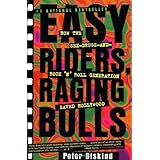
Average Reviews:

(More customer reviews)Are you looking to buy Easy Riders, Raging Bulls: How the Sex-Drugs-and-Rock 'N' Roll Generation Saved Hollywood? Here is the right place to find the great deals. we can offer discounts of up to 90% on Easy Riders, Raging Bulls: How the Sex-Drugs-and-Rock 'N' Roll Generation Saved Hollywood. Check out the link below:
>> Click Here to See Compare Prices and Get the Best Offers
Easy Riders, Raging Bulls: How the Sex-Drugs-and-Rock 'N' Roll Generation Saved Hollywood ReviewWhile quite a readable page-turner, in the final analysis this is a book more for a Access Hollywood type fan than cinema lovers. Surprisingly few reviewers have called Biskind on the carpet for what is essentially a cut and paste job cobbled together from past articles he published in Premiere magazine. It goes a long way in explaining the rather pell-mell, Pulp Fiction-esque chronology (although I did like the breather one gets from the biography for each major player not appearing until he was upon their first significant foray into filmmaking). But in trying desperately for this middle ground he fails on each front. Gossip and tabloid fans will find the scrawny photo section leaves much to be desired with many oft-cited figures without any pics, others too many. The more serious cinemaphile would be at a loss to explain many of the figures' appeal without actually knowing their work or habits. He might tell you , in the case of Hal Ashby, "actors killed to wo! rk with him" but I'd be damned if I could tell you why from reading Easy Riders, Raging Bulls. And the structure must have baffled even the author as dramatic tension is lost as he introduces facts too early. In a prime example, Biskind first introduces us to Melissa Mathison as "[the person] who would go on to marry Harrison Ford and be nominated for an Oscar.." instead showing her "arc" that went from babysitter, to assistant, to writer, to chief mistress before she took up with Harrison Ford which he fails to point out happened on Apocalypse Now. He also entirely skips the drama and the chance to draw meaning out of the release of E.T. The Extraterrestrial (the critical and commercial success, the Oscar race - not to mention Mathison's huge settlement over merchandising rights), possibly due to the fact that would undercut his whole Spielberg-the-destroyer-of-all-things-art theme. Which brings me to what probably what is the book's biggest stumble! , Biskind's muddle-headed attempt to affix blame for the en! d of his beloved New Hollywood. As several other reviews have pointed out, Biskind's roots are showing in his pretty naked adoration for this period. "...rock and roll generation saved Hollywood..." only works if you toss out these inconvenient and rather typical top grossing studio pictures from '68 to '75: Bullitt, Funny Girl, the Odd Couple, Romeo and Juliet, Butch Cassidy and The Sundance Kid, Hello, Dolly! The Love Bug, Airport, Love Story, Patton (while written by Coppola, way too straightforward and patriotic. Hell, it even has a neo-upbeat ending), Diamonds Are Forever, Fiddler on the Roof, Summer of '42, The Poseidon Adventure, Papillon, The Way We Were, Blazing Saddles, Earthquake, The Towering Inferno, and Young Frankenstein. He also downplays the fact that while they were made by his New Hollywood group some are not what one would call typical 70's fare like The Sting, What's Up Doc? He undercuts his own arguments by showcasing the out-of-control na! ture he seems to want to blame away on mountains of cocaine, while turning the Studios into the Empire each with a Darth Vader at the helm. If these directors had wanted to remain in positions of power, they should have taken the responsibility they had to the execs that supported them seriously. Also is ignored is the fact that collapse of this generation created a vacuum for films of a serious nature that was supplied by new centers of filmmaking, most notably New York Independent and Great Britain. Think about the significance of 1981's Academy Awards when Beatty won best director for Reds, while best picture went home with the producers of Chariots of Fire which started four straight years of UK nominations or wins for Picture or Director. Considering the dismal output from Hollywood over the last couple of years, those blockbusters and irresponsibility have reached their nadir with the present corporate owners so incapable of producing even decent summer popcorn flicks! that they have snapped up every former independent like cr! eative transplant operations. Instead of establishing a way in once they got their foot in the door so other young American up and comers could get in, they saw to it that way was sealed up but good. Biskind follows the same trajectory, starting off with great promise before losing his way after the decade ends and finds he has only sputtering moments of merit. I found myself rooting for the phlebitis to finish off Ashby, as I had little sympathy for someone who'd rather indulge his passion for drugs than that other bringer of euphoria: art. An editor in fact is what Biskind needed the most, who most certainly would have told him to bring it to a close with Raging Bull and put the rest into an epilogue. "We blew it." Boy, did they ever.Easy Riders, Raging Bulls: How the Sex-Drugs-and-Rock 'N' Roll Generation Saved Hollywood OverviewWant to learn more information about Easy Riders, Raging Bulls: How the Sex-Drugs-and-Rock 'N' Roll Generation Saved Hollywood?
>> Click Here to See All Customer Reviews & Ratings Now

0 comments:
Post a Comment