Average Reviews:

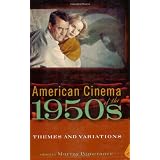
(More customer reviews)Are you looking to buy American Cinema of the 1950s (Screen Decades: American Culture/American Cinema)? Here is the right place to find the great deals. we can offer discounts of up to 90% on American Cinema of the 1950s (Screen Decades: American Culture/American Cinema). Check out the link below:
>> Click Here to See Compare Prices and Get the Best Offers
American Cinema of the 1950s (Screen Decades: American Culture/American Cinema) ReviewAmerican Cinema of the 1950s doesn't include any movies by David Lynch (his first major film, Eraserhead, didn't come out until 1976), but this book proves Lynch's point.Adrienne L. McLean's essay on Vertigo and Hitchcock (1958) kept reminding me of Lynch. Hitchcock always said he was trying to create "pure cinema" and Lynch says he wants to put "dreams" on the screen. In Vertigo, Judy is Madeleine, and in Lynch's films Lost Highway and Mulholland Drive the main characters are all really someone else.
Each chapter has a brief survey of the major films of the year and then looks at whatever theme struck the author as being important. I like this approach because it emphasizes the stories themselves - - what they meant to say, what they succeeded in saying, and what they might have failed to say.
In his essay on race in 1959 movies, Arthur Knight talks about Harry Belafonte's apocalpytic fantasy The World, the Flesh, and the Devil and his crime drama Odds Against Tomorrow. Both movies dealt with the same theme - - the struggle between a black man and a white man. In the fantasy there's hope at the end, but in the noir each protagonist would rather die than let the other escape. In the crime story they're fighting over money, and in the end-of-the-world story they're fighting over a woman. So in The World, the Flesh, and the Devil there may be hope for racial peace, but only if the one woman left alive will allow the two men to decide her place in the new society.
There are other essays that deal with the women in fifties movies and the women who made fifties movies. In her chapter on "Movies and Landscapes" in 1950, Mary Beth Haralovich compares Nicholas Ray's In a Lonely Place and Ida Lupino's Outrage, looking at "characters who suffer emotional trauma in the violent domestic aftermath of World War II."
(SPOILER NEXT PARAGRAPH.)
It's interesting that in the film In a Lonely Place, directed by Nicholas Ray, the angry veteran Dix Steele is just as much a victim as Laurel, the woman he falls in love with but still can't help almost murdering. However in the novel the movie's based on, written by a woman, Dix is the serial killer the police are looking for.
Masculinity gets examined too, in Kristen Hatch's chapter on 1951, which analyzes A Place in the Sun, Strangers on a Train, and A Streetcar Named Desire.
Another good essay is Barry Keith Grant's on 1956 and "Movies and the Crack of Doom." Nineteen fifty-six was the highpoint of the decade for science fiction and horror. Invasion of the Body Snatchers of course, but also Forbidden Planet, World without End, Godzilla, Earth versus the Flying Saucers, The Beast with a Million Eyes, even The Ten Commandments would qualify (as both fantasy and horror).
But the "Crack of Doom" doesn't just come via the monster from the Id or seed pods from outer space, it also comes out of "the hydrogen jukebox." Nineteen fifty-six was the start of another invasion - - of rock and roll movies aimed at a new audience, teenagers.
And the door closed on John Wayne's Ethan Edwards at the end of The Searchers (the last of the old-fashioned racist Westerns, and the only John Ford movie that's still watchable for anyone born in the 1950s or later).
American Cinema of the 1950s has a timeline of social, political, and military events, and major academy award winners for each year.
What made this book interesting was focusing on worries that forced their way to the surface in each year of the 1950s. We still worry about the same things.American Cinema of the 1950s (Screen Decades: American Culture/American Cinema) Overview
Want to learn more information about American Cinema of the 1950s (Screen Decades: American Culture/American Cinema)?
>> Click Here to See All Customer Reviews & Ratings Now

0 comments:
Post a Comment